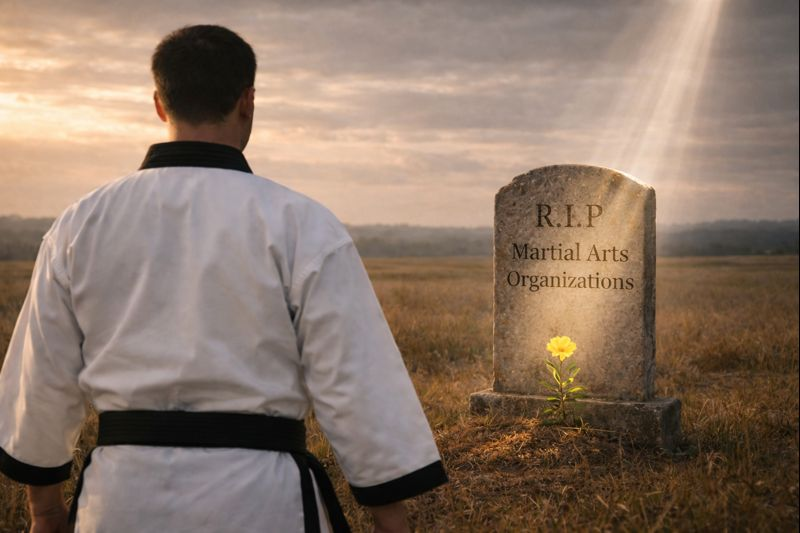
The Decline of Martial Arts Organizations — And How They Can Turn It Around
by MASTERSEGARRA
By Dan Segarra, 9th Degree Black Belt in Tang Soo Do
Over the last twenty years, nearly every traditional martial arts organization has experienced decline or stagnation. Let’s face it. Membership numbers are down. Schools are closing. Once-strong lineages feel fragmented, quieter, and less visible.
This isn’t happening because martial arts stopped working.
It’s happening because the world changed—and too many organizations didn’t change with it.
Understanding why this happened is important. But more important is answering the real question:
How do we turn it around?
Why the Decline Happened
1. Society Shifted From Formation to Consumption
Traditional martial arts were built to form people—over years, sometimes decades. Modern culture is built to consume experiences quickly.
Patience, repetition, silence, and discipline no longer compete naturally with instant gratification, entertainment, and constant stimulation. Arts that do not actively communicate their deeper value get overlooked, regardless of how powerful they are.
2. The “Why” Was Lost
Many (not all) organizations slowly stripped a clear deeper philosophy from the curriculum. Character development became a slogan instead of a system. When students don’t understand why they bow, train, struggle, and persevere, training becomes mechanical.
Without philosophy, martial arts turn into exercise classes with belts—and exercise classes are everywhere.
3. MMA Changed the Conversation
MMA didn’t kill traditional arts, but it reframed public expectations. Effectiveness became measured almost exclusively by cage performance.
But the world doesn’t need more fighters.
It needs disciplined, ethical, resilient human beings.
Traditional martial arts answer a question MMA never tries to answer:
Who are you becoming through this training?
4. Organizations Either Froze or Diluted
Some stayed frozen in time. Like an exhibit in a museum.
Some refused to adapt at all—rejecting technology, online education, and modern language. They became invisible.
Some others chased trends—lowering standards, inflating ranks, and losing depth. They became irrelevant. A simple example of this is look at various organizations websites. Are the up to date? Do the serve the members? or are they just an advertisement for the organization that looks like a volunteer did it for free?
Very few walked the middle path:
Let tradition guide you, not anchor you.
5. Knowledge Was Hoarded
Too much knowledge was never written down, recorded, or translated. When teachers passed, their insight vanished with them.
An art that doesn’t document itself slowly erases itself.
6. Fragmentation and Ego
Politics, territorial thinking, and personality-driven leadership fractured communities. Students don’t want to inherit grudges they didn’t start.
Fragmentation weakens visibility, trust, and growth.
How They Turn It Around
1. Restore Philosophy as the Core
Character development must be taught intentionally, not assumed. Ethics, restraint, responsibility, humility, and perseverance should be embedded into daily training—not just recited.
Martial arts must again answer the question:
How does this make you a better human being?
2. Redefine Success — And Deliver on It
Winning is not the goal. Longevity, contribution, and personal growth are.
But redefining success is not enough—we must demonstrate it.
Martial arts organizations need to clearly show how Tang Soo Do helps people—and then make sure students actually achieve the results we promise. If we say training builds confidence, discipline, focus, emotional control, and resilience, our curriculum, teaching methods, and culture must support those outcomes consistently.
That means:
- Measuring progress beyond belts
- Supporting mental and emotional development
- Helping students apply lessons outside the dojo/dojang
- Communicating real-world benefits to parents and adults
When people can see and feel the results—stronger character, better decision-making, calmer minds, healthier bodies—Tang Soo Do becomes relevant again.
Results build trust.
Trust builds longevity.
3. Embrace Technology Without Dilution
Online education, social media, podcasts, and digital archives are not threats—they are lifelines.
If the art is invisible online, it doesn’t exist to the next generation.
Use technology to:
- preserve knowledge
- reach new students
- connect generations
- document curriculum
Depth and accessibility can coexist.
4. Encourage Documentation and Sharing
Write. Record. Teach. Translate. Preserve.
Knowledge kept secret eventually dies. Knowledge shared responsibly survives.
If you benefited from the art, you have a responsibility—의무 (Ui-Mu)—to contribute to its future.
5. Shift From Gatekeeping to Stewardship
The role of senior practitioners is not to guard the gate—it’s to protect the road.
Standards matter. Depth matters. But so does mentorship, humility, and openness. Strong arts don’t fear growth; they guide it.
6. Rebuild Community — End Elitism and Isolation
Tang Soo Do organizations must stop behaving as isolated islands.
Elitism, isolation, and “us versus them” thinking have done enormous damage. No single school or organization owns the art. When groups refuse to support one another, everyone loses—especially the next generation.
Tang Soo Do thrives through brotherhood, not barricades.
Organizations should actively support:
- inter-school tournaments
- open seminars
- joint events
- shared celebrations of the art
- Don’t be afraid to comment positively on social media when a fellow TSD practitioner puts themselves out there. It does not take anything away from you, it actually shows your engagement and support setting the example for others.
Healthy competition builds respect.
Shared events build unity.
Brotherhood builds longevity.
Students should feel part of something bigger than their own school. When organizations work together instead of apart, the art grows stronger, louder, and more visible.
Isolation weakens.
Community multiplies.
The Opportunity Ahead
The world is anxious, distracted, and polarized. People are searching for structure, meaning, discipline, and inner peace.
This is exactly what traditional martial arts were designed to provide.
The decline of martial arts organizations is not a sign that the art is obsolete.
It is a sign that stewardship is required.
If we restore philosophy, deliver real results, embrace preservation, adapt wisely, and act with Ui-Mu, martial arts won’t just survive—they will matter again.
And when that happens, we won’t be asking whether martial arts are dying.
We’ll be asking how we ever forgot their value.
For deeper study, preservation efforts, and resources dedicated to strengthening the future of the Warrior-Scholar path, visit
Https://tangsoodoresource.com


